
Turning Bottles Back Into Bottles: Improving Recycling Outcomes
Recently Chris Grant had an interview with The Press and RNZ on the Christchurch City Councils recent request for submissions on extending kerbside recycling for Christchurch residents. See the interviews below:
Glass has long been considered one of the best materials to recycle when it is separated from other materials, yet there is glass collected through kerbside recycling in New Zealand that is still not returned to bottle manufacturing. Instead, it could be crushed for lower-value single use applications such as construction and roading or sent to landfill, ending its usable life.
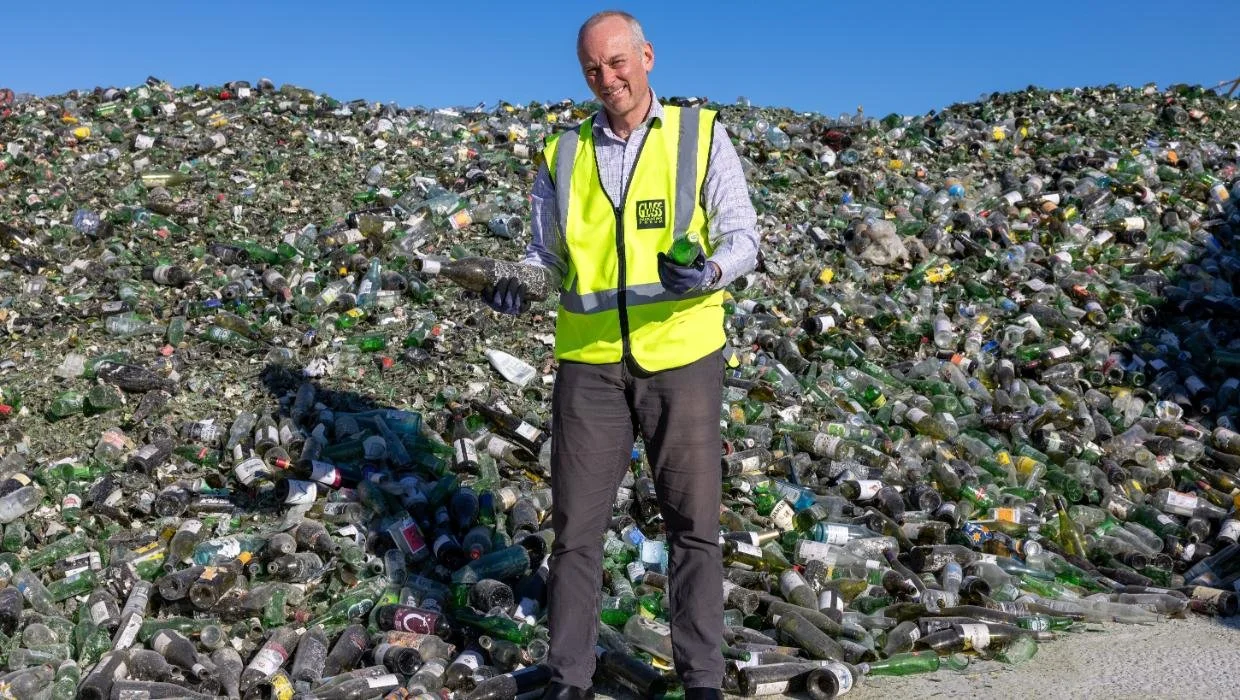
Photo Credit: Peter Meecham / The Press
Recent discussion around Christchurch's waste strategy has brought renewed attention to how glass is collected and processed, and whether new approaches could unlock greater environmental and economic benefits.
The challenge facing many recycling systems is contamination. When glass is collected alongside cardboard, paper, plastics and metals, it can break during transport and sorting. Those glass fragments then become mixed with other recyclables, reducing their quality and making recovery more difficult. Industry experts say contamination is one of the biggest barriers preventing higher-value recycling outcomes for glass across New Zealand.

Kerbside bins in Central Otago for glass collection.
A growing number of councils around New Zealand have moved towards collecting glass separately from other recyclable materials. This approach enables glass to be sorted by colour and processed into clean cullet, a recycled glass product that can be used in manufacturing and a range of other applications. Clean recycled glass can be transformed into new bottles and jars, helping to create a circular system where materials continue to be reused rather than discarded.
The benefits extend beyond just glass. Removing glass from commingled recycling streams can also improve the quality of paper, cardboard, plastics and metals by reducing breakage and contamination. That means more materials can be successfully recovered and returned to productive use.
New Zealand is in a unique position when it comes to glass recycling. Unlike some materials that require export for processing, glass can be recovered, processed and reused domestically. The Ministry for the Environment notes that recycled glass can be cleaned, separated and incorporated into new glass products, reducing the need for virgin raw materials.

Bottle glass separated by colour to be remanufactured.
Industry leaders believe even greater recovery rates could be achieved if New Zealand's largest urban centres continue to improve the way glass is collected. Speaking recently on RNZ's Checkpoint programme, 5R Solutions Managing Director Chris Grant said that reducing contamination and increasing access to quality glass collections could significantly improve the amount of glass recycled nationwide.
For Christchurch, the conversation is about more than waste management. It is about maximising the value of a recyclable resource and supporting a circular economy where materials remain in use for as long as possible. Glass is one of the few materials that can be infinitely recycled repeatedly without losing its core properties, making it a valuable resource when collected and processed correctly.
As Christchurch considers the future of its recycling system, the discussion highlights a broader shift occurring across New Zealand. The focus is moving beyond simply diverting waste from landfill and towards finding ways to keep valuable materials circulating within the economy. For glass, that means creating pathways that allow yesterday's bottles and jars to become tomorrow's products rather than the end of the line.
Sources: The Press, RNZ Checkpoint, Ministry for the Environment and Christchurch City Council waste management consultation material.